
Real Options, Risks, & Why Non-Profit Help Matters
If you’re researching debt consolidation with bad credit, you’re likely feeling overwhelmed and frustrated. High monthly payments, collection calls, rising interest, and the fear of bankruptcy can make it hard to think clearly about your next step.
The honest truth is, you don’t need perfect credit to explore solutions. But not all debt consolidation options are created equal. Some options can increase your total repayment costs or put additional assets at risk.
This guide provides clarity, not pressure. You deserve to understand your options before making any decisions.
What Does “Debt Consolidation with Bad Credit” Really Mean?
Debt consolidation means combining multiple debts into one structured monthly payment.
But the method matters.
There are five primary debt consolidation options for bad credit. Two rely heavily on your credit rating. Two consider credit along with other financial factors. Only one debt consolidation option does not use your credit score as a qualification barrier.
1. Debt Consolidation Loans
A debt consolidation loan is a new loan used to pay off existing debts, such as credit card debt or medical bills. You then repay the new loan in fixed installments. Approval and interest rates heavily depend on your credit score.
Since there is no collateral involved to defray the risk taken on by the new lender, it is understandable that credit ratings play such an important role in your account qualification. If you miss payments, the lender has little recourse beyond reporting to credit bureaus, selling the account to collections, or pursuing legal action.
Consequently, individuals with poor credit often struggle to qualify through traditional lenders such as banks or credit unions.
Some borrowers turn to peer-to-peer lending sites like Prosper.com or LendingClub.com. These platforms may consider more than just your credit score—including income and personal financial story—but interest rates are typically higher, often in the low double-digit range.
While this may provide approval, it can significantly increase the total cost of repayment.
2. Credit Card Balance Transfers
A balance transfer moves existing balances to a new credit card, often with a promotional 0% APR period.
However, approval generally requires fair to good credit. If you have a low credit score, you may:
- Be denied
- Receive a low credit limit
- Face a high ongoing APR after the promotional period
If you are approved and the balance isn’t paid off before the introductory rate expires, the remaining balance can accrue interest quickly. Keep in mind, you usually have to pay a balance transfer fee, which can be 3–5% of the total amount transferred.
3. Home Equity Loan (HEL) or Home Equity Line of Credit (HELOC)
Home equity loans and lines of credit are available to homeowners if your home is worth at least 20% more than what you owe on it.
Lenders consider:
- Available home equity
- Credit score
- Income stability
If your credit is poor, you may either be denied an HEL or a HELOC or offered unfavorable interest rates.
These two types of loans use your home as collateral. If payments are missed, your home is at risk. For homeowners under financial stress, this can add a significant layer of financial exposure.
4. Debt Settlement Programs
Debt settlement programs attempt to negotiate with creditors to accept less than the full amount owed.
This option differs from debt consolidation because it does not combine payments into a single structured repayment plan. Instead, settlement typically requires accounts to become significantly delinquent before creditors will consider reduced payoff offers.
While settlement may lower the total amount repaid, it can also severely impact your credit score, trigger collection activity, and create possible tax consequences on forgiven debt. It is generally considered a hardship strategy and is not technically a traditional debt consolidation solution.
Learn more about the differences in our guide to debt settlement vs. debt consolidation.
5. Debt Management Plans (DMPs) Through a Non-Profit Agency
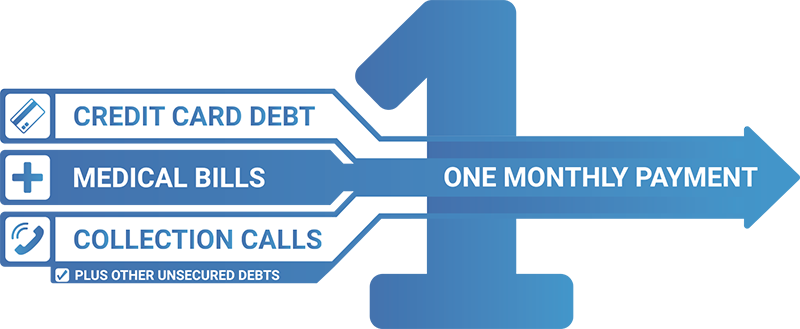
A Debt Management Plan consolidates your unsecured debt into one structured monthly payment. A DMP through a nonprofit credit counseling agency is a strong choice because you’re not being issued a new loan, and it doesn’t require a minimum credit score.
Whether your credit score is high or low (or somewhere in between) is not a qualification factor for a DMP, and participation is voluntary.
Creditors typically consider your income stability, household expenses, and payment history. But you are not denied based solely on your credit score. This is a key difference between loan-based consolidation and non-profit consolidation.
Can You Get a Debt Consolidation Loan with a Low Credit Score?

Yes, but not always through a traditional loan.
Credit scores currently serve as the best predictors of the future likelihood that a borrower will miss a payment. Your credit score depends greatly upon your payment and debt-related activities over the past 6 to 24 months (although activity from as long ago as 10 years can be a factor).
FICO scores in the mid-700 range will usually qualify any borrower for the best repayment terms a lender offers. Scores below 600 are typically considered subprime. If your score is in the mid-500s or lower, qualifying for a low-interest debt consolidation loan will be difficult.
Even if you qualify for low credit score debt consolidation loans, they often come with:
- High double-digit interest rates
- Origination fees
- Short repayment terms
- Co-signer risk
- Increased total repayment cost
If you are consolidating debt with bad credit history, it’s important to ask yourself: Will this reduce my interest, or just shift my debt?
For many households struggling with $20,000–$30,000 or more in revolving balances, loan-based consolidation may not be the safest path.
For more information on credit card debt, see our guide on 9 Strategies on How to Get Rid of 30k in Credit Card Debt.
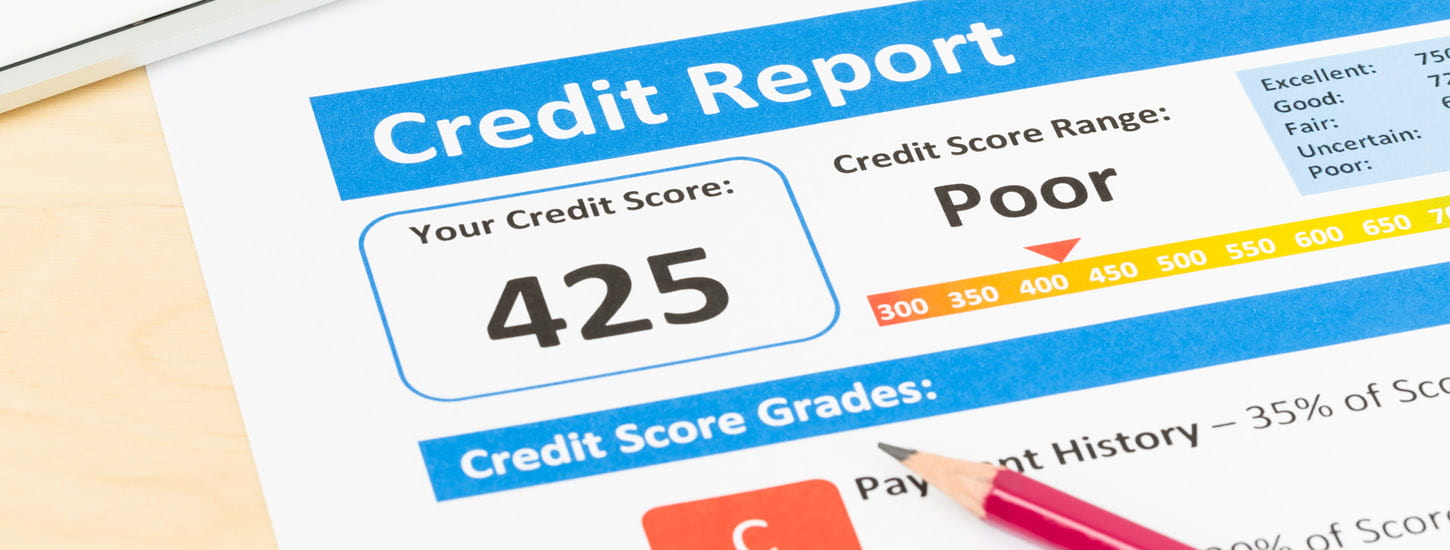
How and Why to Review Your Credit Report
Before you start applying for debt consolidation, you should first check your credit report. Since 2004, you have had the right to pull your free credit report (no credit card needed) from AnnualCreditReport.com. There is no fee, and accessing your report does not affect your credit rating.
Your credit reports list all credit accounts opened, used, or closed within the past seven to ten years. Your reports also include account status, balances, payment history, the highest balance, the original balance, and more.
Review this information carefully and look for errors. Many credit reports contain inaccuracies. If you find a mistake, you can dispute it directly with Equifax, Experian, or TransUnion. Investigations typically take 30 days or less. While the free report does not include your FICO score, many consumers use free credit score services for a general understanding of where they stand.
If you want a FICO score like the score potential lenders will use, you can pay for it at myFICO.com. However, most consumers will be fine using a free credit score service such as CreditKarma.com, Mint.com, CreditSesame.com, and Credit.com instead.
The Safer Alternative: Working with a Non-Profit Debt Agency
A nonprofit credit counseling agency offers a different approach—one with no judgment.
Instead of issuing a new loan, they help structure a Debt Management Plan that:
- Combines your unsecured debt payments into one monthly payment
- Negotiates reduced interest rates with creditors
- Often stops late fees and penalty rates
- Does not require good credit for enrollment
Non-profit status is important. It means the organization’s mission is financial education and sustainable repayment, not profit from high-interest lending.
Step-by-Step: How Non-Profit Debt Consolidation Works
Step 1: Free Financial Review
The process begins with a confidential review of your financial situation.
A certified credit counselor will look at your:
- Income
- Household expenses
- Current debt balances
- Payment history
- Financial goals
This review is designed to help you understand your full financial picture. Certified credit counselors give structured guidance. They don’t judge your situation; they just help you find ways to improve it.
Nonprofit agencies approved by the U.S. Department of Justice Executive Office for U.S. Trustees are authorized to provide credit counseling services, including required counseling for individuals considering bankruptcy. While approval does not guarantee service quality, it does indicate the agency meets federal standards.
Step 2: Budget and Affordability Assessment
Your credit counselor will help you build a workable household budget.
Lenders offering concessions through a DMP typically consider:
- Your history of payments
- The presence of steady income
- Your necessary living expenses
The purpose of this step is to determine a realistic monthly payment—one that allows you to repay your debts while maintaining essential household stability.
Step 3: Creditor Negotiations
If you decide to move forward, the agency contacts your creditors to request account concessions.
These concessions may include:
- Reduced interest rates
- Waived late fees
- Re-aging delinquent accounts
Creditors may choose whether to approve concessions and how deeply to reduce interest rates. However, those decisions do not prevent you from participating in the structured payment consolidation service.
Step 4: One Structured Monthly Payment
Instead of managing multiple due dates and interest rates, you make one consolidated monthly payment to the agency.
The agency then distributes funds to each creditor in accordance with the agreed repayment plan.
This simplifies your payment schedule and can reduce overall interest costs, depending on the concessions granted.
Step 5: Ongoing Support and Financial Education
Debt repayment takes time and consistency. Throughout the plan, you receive ongoing support and guidance.
Nonprofit credit counseling agencies are designed not only to help consolidate payments, but also to provide budgeting tools and financial education to prevent future debt cycles.
The goal is long-term stability, not short-term relief.
Questions to Ask Before Choosing Any Debt Consolidation Option
When evaluating any organization, ask:
- Is this agency non-profit or for-profit?
- Are fees transparent and reasonable?
- Will this further negatively impact my credit?
- Do I retain control of my accounts?
- Am I being pressured to enroll immediately?
Reputable organizations welcome questions. They do not rush you.
What to Avoid If You Have Bad Credit
When your credit is already strained, avoid solutions that add risk:
- High-interest consolidation loans
- “Guaranteed approval” claims
- Upfront fees before services are provided
- Promises to “erase” debt quickly
- Advice to stop paying creditors without clear explanation
Stopping payments can expose you to legal consequences, including wage garnishment or account levies.
The goal is not to create fear—it’s to protect you from compounding the problem.
Is Debt Consolidation the Right Next Step for You?
There is no one-size-fits-all solution to get out of debt.
For some, a consolidation loan works. For others, a structured Debt Management Plan offers more stability. In certain situations, settlement or bankruptcy may need to be evaluated.
What matters most is making an informed decision without pressure, shame, or unrealistic promises.
If you struggle to pay your bills and worry about failing in your future financial obligations, consider speaking with a certified credit counselor who can walk you through your specific situation.
You deserve clarity. You deserve options. And you deserve a path forward that protects your long-term financial health.

About the Author
Author and Accredited Financial Counselor®, Todd R. Christensen, MIM, MA, is the Education Manager for Debt Reduction Services, a nationwide nonprofit financial wellness and credit counseling agency. Todd develops educational programs and produces materials that teach personal financial skills and responsibilities to all ages. He’s also the author of the book Everyday Money for Everyday People.